
IPL vs Fractional Laser for Sun Damage: Which Treatment Targets What?
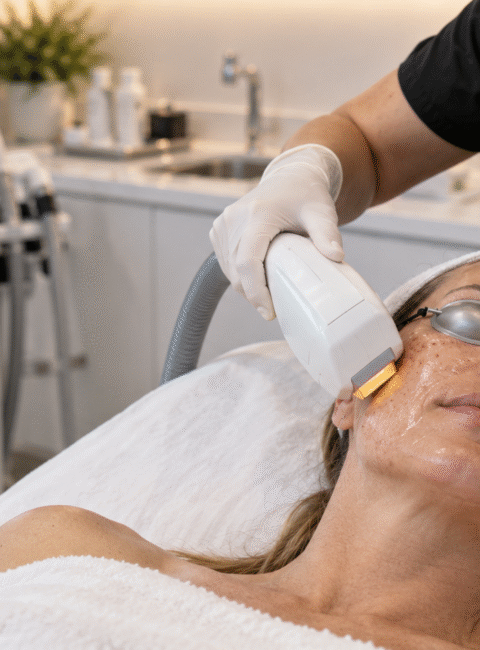
If you’re comparing IPL vs fractional laser for sun damage, start with what you actually see in the mirror. IPL primarily targets color, including brown spots, freckles, uneven pigmentation and redness. Fractional laser treatments focus more heavily on texture, fine lines, enlarged pores, scarring and collagen remodeling. At Dignity Medical Aesthetics & Wellness, we use both approaches, and for patients dealing with a combination of discoloration and texture changes, treating both concerns may make more sense than expecting one technology to do everything.
There’s another distinction worth knowing before comparing treatments: fractional laser isn’t one single procedure. Our laser menu includes a lower-downtime 1540 non-ablative fractional treatment as well as a stronger CO2 fractional resurfacing option. They work at different intensities and come with different recovery expectations.
IPL vs Fractional Laser: What’s the Main Difference?
IPL stands for intense pulsed light. Although people sometimes group it with laser treatments, IPL uses broad-spectrum light rather than a laser. The treatment targets areas of pigment or redness that look darker than the surrounding skin.
Our IPL Photofacial treatment is used for concerns such as freckles, age spots, solar lentigines, hyper pigmentation, rosacea, broken capillaries and flushing. It can also treat areas beyond the face, including the neck, chest, arms, shoulders, upper back and hands.
Fractional resurfacing takes a different approach. Rather than mainly seeking out visible brown or red pigment, a fractional laser treats microscopic sections of the skin while leaving surrounding areas untreated. With non-ablative fractional resurfacing, heat below the surface stimulates collagen without destroying surface skin cells. Fractional CO2 treatment creates controlled micro-injuries for a more intensive resurfacing effect.
The American Academy of Dermatology also lists both intense pulsed light and laser resurfacing among treatments used for visible sun damage, while laser resurfacing has a broader role in treating wrinkles and textural aging. The American Academy of Dermatology’s guide to treating sun-damaged skin explains the different concerns these procedures may address.
When IPL Makes Sense for Sun Damage
IPL is usually the more directly targeted option when your biggest complaint is discoloration.
Think about skin that feels relatively smooth but has developed scattered brown spots after years of sun exposure. You might notice freckles becoming more prominent, uneven pigment across the cheeks, or redness around the nose. Those are different concerns from acne scars or deeper textural changes.
IPL works with pigment and vascular color, which is why we use it for both brown and red discoloration. Brown spots commonly become temporarily darker after treatment before moving toward the surface and flaking away. Redness can also require more than one treatment depending on its type and severity.
Recent tanning matters. IPL should not be performed on tanned skin or over self-tanning products because the treatment is looking for pigment. Extra pigment in the surrounding skin can increase the risk of an unwanted reaction. Sun exposure and your current skincare routine should be part of the conversation before scheduling.
When Fractional Laser Targets the Bigger Problem
Fractional resurfacing becomes more relevant when sun damage has changed how your skin feels as much as how it looks.
Fine lines, enlarged pores, roughness and scarring are structural concerns. Brown spots may be present too, but removing pigment alone won’t necessarily address that uneven surface.
Our 1540 non-ablative fractional resurfacing treatment focuses on concerns such as fine lines, enlarged pores, scars and overall texture. The treatment heats the skin without destroying skin cells, which keeps recovery relatively short. Most patients benefit from a series of three treatments spaced about a month apart, and improvement continues as collagen remodeling develops.
This is an important distinction for someone who says, “My sun spots bother me, but so does the rough texture around my cheeks and eyes.” IPL may address the visible pigment more directly, while fractional treatment works on the textural side of the problem.
Where CO2 Fractional Laser Fits In
CO2 fractional laser takes resurfacing further.
At Dignity, CO2 fractional laser resurfacing is used for concerns including wrinkles, acne and surgical scars, uneven texture, changes in tone and skin laxity. Because it creates a stronger resurfacing response, recovery is more noticeable than with our non-ablative 1540 treatment.
Most of our CO2 patients plan for roughly five to seven days of social downtime. During early healing, redness, peeling, warmth and mild swelling are expected. Improvements continue beyond that initial recovery period as the skin remodels over the following weeks.
That makes CO2 a very different decision from treating a few brown spots with IPL. If your primary concern is pigmentation and you otherwise like your skin texture, stronger resurfacing may be unnecessary. When deeper lines, scarring or more established textural changes are part of the picture, the additional recovery may make more sense.
What If You Have Brown Spots and Texture Changes?
This is where the IPL vs fractional laser question gets more interesting because many people have both.
Years of UV exposure don’t create one uniform change. You might have freckles across the cheeks, redness around the nose, larger-looking pores, fine lines around the eyes and rougher skin on the chest at the same time.
One technology doesn’t have to carry the entire treatment plan.
Dignity’s 3D Laser Treatment specifically combines an IPL photofacial with 1540 fractional resurfacing during the same treatment series. IPL addresses pigmentation while the fractional treatment works on fine lines, pore size, texture and acne scarring. The full series consists of three sessions spaced about a month apart.
That combination illustrates why identifying the concern matters more than simply choosing between two treatment names. If you have two different types of sun-related changes, your plan may need to address them at different depths.
How Does Downtime Compare?
IPL generally has a lighter recovery profile. Some redness can occur, and treated brown spots often darken before they flake away. Depending on the area, that process can last from several days to longer on areas such as the chest. Swelling is also possible, particularly when redness or visible vessels are being treated.
Non-ablative fractional resurfacing usually involves warmth immediately after treatment followed by possible redness or swelling. Dignity patients can generally return to work within a day or two, although swelling may linger for several days in sensitive areas such as around the eyes.
CO2 requires the most planning of these options. Our patients generally allow about five to seven days for visible healing, and you should give yourself more time before an important event because the skin continues settling after that initial period.
Which Treatment Should You Choose for Sun Damage?
Look at the concern before the technology.
If brown spots, freckles or redness are the main issue, IPL may be the treatment worth discussing first. If the bigger problem is fine lines, rough texture, enlarged pores or scarring, fractional resurfacing targets those changes more directly. Someone with more pronounced textural aging may want to discuss CO2 resurfacing, while a person who wants less interruption to their schedule may be better suited to non-ablative fractional treatment.
If you see both discoloration and texture changes, a combined approach may be appropriate. Dignity already uses that strategy in our 3D treatment, pairing IPL with 1540 fractional resurfacing rather than expecting one procedure to address every concern.
Skin tone, recent sun exposure, medical history, medications, previous treatments and the amount of downtime you can realistically manage also affect the decision. A treatment that makes sense for one person’s sun damage may be unnecessarily aggressive or poorly timed for someone else.
Choosing IPL or Fractional Laser in El Dorado Hills
You don’t need to arrive at your consultation knowing which machine you need. Tell us what bothers you.
Point out the brown spots you keep covering with makeup. Mention the rough texture that seems more noticeable in certain lighting. Tell us if redness bothers you more than wrinkles, or if you’d rather complete a series of lighter treatments than plan around a week of visible recovery.
At Dignity Medical Aesthetics & Wellness in El Dorado Hills, we offer IPL, non-ablative fractional resurfacing, CO2 fractional laser and combination laser treatments, so we can compare the concern with the treatment instead of trying to fit every type of sun damage into one procedure.
If you’re deciding between IPL vs fractional laser, schedule a consultation with our team and come prepared to identify the changes you want to improve, how much downtime you’re comfortable with and whether you have any important events coming up. Those details make the treatment conversation much more specific.